Spring Landscaping DIY Projects That Fix Drainage and Boost Resale Value
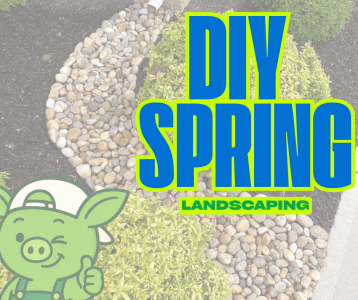
Spring landscaping projects that solve drainage and raise the “this house feels cared for” factor
Spring curb appeal usually gets framed like it’s all flowers and fresh mulch. Meanwhile, half the Midwest is staring at a yard that squishes when you walk on it.
Here’s the truth: the outdoor upgrades that make a home look expensive are the same upgrades that keep water away from your foundation, protect your basement, and reduce maintenance drama all season.
That’s why this year’s Green Home spring niche is rain-ready curb appeal.
It is:
-
highly searched in spring
-
actually useful
-
easy to DIY in stages (According to NAR, only 13% of homeowners are pure DIY-ers)
-
aligned with 2026 landscaping trends like native plants, rain gardens, and permeable surfaces
-
tied to resale value, because well-kept landscapes and upgrades consistently show strong ROI and homeowner satisfaction
Why drainage landscaping is a green home move
Water management is sustainability. When runoff is controlled and the yard absorbs water properly, you reduce erosion, protect soil health, and cut down on damage that leads to repairs and waste.
Per the EPA, permeable pavement options help reduce runoff by letting rain and snowmelt soak through, and can filter pollutants.
Rain gardens also slow stormwater and filter runoff.
So yes, this is curb appeal. It’s also long-term home durability.
The 3 spring landscaping DIY projects with the biggest payoff
These are the projects that hit the sweet spot: they look good, work hard, and are searchable.
1) Extend your downspouts the right way
If water dumps next to your foundation, no amount of pretty landscaping will fix the root problem.
DIY win: Add downspout extensions so water discharges farther from the home.
Make sure the discharge area drains away and does not send water to your neighbor’s foundation.
Why buyers love it: It signals a home that has been protected, not patched.
When to hire a pro: If you need buried drains, tie-ins to storm systems, or the yard slope needs correction.
2) Build a simple rain garden where water already wants to go
A rain garden is basically a shallow bowl that collects runoff and lets it soak in, instead of racing across your yard.
A straightforward definition from a river authority guide: rain gardens are shallow basins around 6 to 9 inches deep designed to capture runoff from roofs and hard surfaces.
DIY win: Pick a low spot, keep it away from your foundation, and plant it with appropriate species.
If you want to go deeper, you can add an overflow path so heavy storms have a safe “exit.”
Why buyers love it: It reads as intentional landscaping, not a wet yard problem.
2026 trend alignment: Rain gardens and bioswales are repeatedly cited as resilience-forward trends.
3) Swap one muddy path for a permeable walkway
If you have a “mud lane” from driveway to door, fix that and your whole yard feels cleaner.
Per the EPA, permeable pavement options like interlocking pavers and grid pavers allow water to seep through into underlying layers, reducing runoff and filtering pollutants.
DIY win: A small permeable paver path or stepping-stone walkway with a properly prepared base.
Why buyers love it: Instant curb appeal upgrade and it telegraphs maintenance maturity.
When to hire a pro: Large driveways, heavy-use areas, grading changes, or if drainage is tied into a bigger stormwater plan.
The “trending landscaping” buyers are responding to in 2026
You can be trendy without being tacky. These trends also happen to be lower-maintenance:
Native and pollinator-friendly planting
Native plants are showing up everywhere in 2026 trend lists because they’re resilient and lower input.
For resale, it’s less about “native” as a label and more about the outcome: healthy beds that do not look fried by July.
Less turf, more purposeful yard space
Many trend sources call out movement away from traditional turf-only yards toward function: edible landscaping, defined outdoor living, and lower-water designs. We break down native lawns in more depth here.
Permeable hardscaping and stormwater-smart design
Permeable surfaces and rain gardens are both trend-forward and practical.
What increases resale value the most
The strongest, simplest answer is not glamorous: maintenance and overall landscape upgrades.
Multiple summaries of the NAR and National Association of Landscape Professionals outdoor findings highlight strong ROI for maintenance and landscape upgrades.
Translation for homeowners:
Before you install something fancy, make sure the yard looks cared for, water flows correctly, edges are crisp, and beds look intentional.
If you want one upgrade that reads high-end fast:
-
Create one focal moment (front door planters, clean walkway framing, a feature tree), then simplify around it.
DIY vs hire a pro
Here’s the clean dividing line:
DIY is great for:
-
Downspout extensions
-
Bed edging and mulch refresh
-
Small rain gardens
-
Small paths and stepping stones
-
Planting and bed refresh
Hire a pro for:
-
Grading and slope correction
-
French drains or buried drain lines
-
Large hardscaping installs
-
Tree work near structures
-
Anything that changes water flow in a way that could impact neighbors
Read more on when to DIY vs. hire a pro for general home projects with our guide.
The Pigybak tie-in
This niche is built for neighbor coordination.
Spring is when entire streets do the same work:
-
mulch
-
bed cleanup
-
gutter cleaning
-
downspout work
-
power washing
-
landscaping refresh
Pigybak move: Start a Pigybak Ride for “Spring Curb Appeal Week.”
Everyone hires separately, but you coordinate the timing and scope so pros can route efficiently and homeowners can compare what’s included.
That’s how you get faster scheduling and fewer weird quotes.