12-Month Home Maintenance Calendar: Plan Your Home Year Without Getting Overwhelmed
Most home maintenance fails for one reason: it lives in your head, not on a calendar.
This week’s theme is plan your home year. Not with a massive remodel fantasy. With a simple home maintenance calendar that keeps small issues from turning into expensive ones.
The neighborhood move: pick one monthly task, then start a Pigybak Ride and invite 2 neighbors. When a pro can do similar work on the same street, schedules run tighter, and everyone gets more “done.”
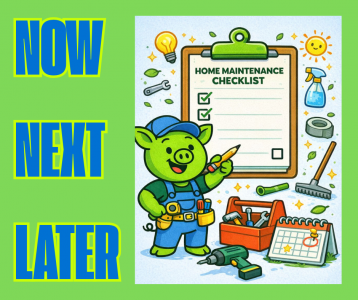
Quick start: the 20-minute Home Year Setup
- Make three lists: Now (safety + water), Next (comfort + efficiency), Later (cosmetic).
- Choose one task per month. Twelve wins beats one chaotic weekend.
- Build your list in one place: use a Pigybak home wishlist so you can batch similar work with neighbors when it makes sense.
- Start a Ride: invite 2 neighbors and ask, “Anyone doing this in the next 30 days?”
Why this matters for energy and comfort: the U.S. Department of Energy says air sealing (caulking and weatherstripping) can offer quick returns, often a year or less. ENERGY STAR notes sealing and insulating can help many homes save up to about 10% on annual energy bills. (Yes, small fixes can actually move the needle.)
The 12-Month Home Maintenance Calendar
This calendar is designed to be realistic. One main task per month, plus one optional neighbor-batch idea.
January: Stop heat leaks and water surprises
- Do a draft walk: doors, windows, attic hatch. Add weatherstripping where needed.
- Check under sinks for slow leaks and moisture.
- Neighbor-batch idea: door sweeps, weatherstripping, and “draft fixes” on one street.
Start a Ride: Start a Pigybak Ride and invite 2 neighbors who also want comfort upgrades this month.
February: Plumbing prevention month
- Check caulk in wet areas (tub, shower, sinks) and refresh where cracking shows.
- Look for toilet wobble and address early before flooring suffers.
- Neighbor-batch idea: small plumbing tune-ups and fixture checks.
March: Spring water management prep
- Inspect gutters and downspouts. Make sure water is moving away from the foundation.
- Scan exterior for gaps where critters and water get in.
- Neighbor-batch idea: gutter cleanouts for a cluster of homes.
April: HVAC readiness and airflow
- Replace or clean HVAC filters (check your system guidance).
- Clear supply and return vents so airflow is not blocked.
- Neighbor-batch idea: tune-ups or filter drops for the block.
May: Exterior entry points
- Inspect window and door trim for gaps, failing caulk, or early rot.
- Fix small gaps now to avoid bigger repairs later.
- Neighbor-batch idea: exterior caulk and seal day.
June: Deck, steps, and safety sweep
- Tighten railings, check steps, and address trip hazards.
- Look for loose pavers or settling walkways.
- Neighbor-batch idea: handrail and step stabilization on one route.
July: Attic and insulation check-in
- Look for obvious attic air leaks, open penetrations, and insulation gaps.
- Consider a pro assessment if you suspect bigger efficiency issues.
- Neighbor-batch idea: attic air sealing consults in the same area.
More guidance: ENERGY STAR’s seal and insulate resources include DIY steps and prioritization.
ENERGY STAR: Seal and Insulate
August: Bathroom and kitchen moisture control
- Confirm bath fans vent to the outside.
- Address recurring condensation and slow leaks before mold and material damage.
- Neighbor-batch idea: fan replacements or ventilation checks.
September: Roof and flashing scan
- Look for missing shingles, flashing issues, or early signs of water intrusion.
- Check attic for staining after heavy rain.
- Neighbor-batch idea: shared roof inspection route.
October: Heating season readiness
- Schedule your heating check before peak demand.
- Replace filters, clear vents, and confirm thermostats behave.
- Neighbor-batch idea: “heating readiness” windows for multiple homes.
November: Weatherize for winter comfort
- Refresh weatherstripping and seal visible air leaks.
- Protect hose bibs and exposed pipes where needed.
- Neighbor-batch idea: weatherization day for the street.
DOE guidance: Weatherstripping and Air sealing.
December: The prevention block
- Choose one “60-minute prevention block” and do it before the holidays.
- Examples: draft sweep, sink leak check, caulk refresh, or safety scan.
- Neighbor-batch idea: small fixes route before year-end.
Homeowner community tip: rally neighbors, split costs, build trust
This is how you turn “I should do this” into “we did it.”
- Pick a category: drafts, gutters, tune-ups, small plumbing, ventilation.
- Keep the invite low-pressure: “I’m planning this in the next 30 days. Anyone else?”
- Coordinate together, pay separately: everyone gets their own invoice.
- Share the outcome: one photo and one tip builds trust fast.
- Start a Ride: Start a Pigybak Ride and invite 2 neighbors.
Want the bigger “why Pigybak” breakdown? Here’s how Pigybak supports neighbor-powered scheduling and savings: Neighborhood Home Services Savings.
Trust builder: avoid contractor scams
Most people do not get scammed because they are careless. They get scammed because they are rushed.
The FTC recommends watching for high-pressure tactics, vague contracts, and payment demands that do not match the job. Bookmark this and share it with your block:
FTC: How To Avoid a Home Improvement Scam
Contractors: want more neighborhood-ready work?
If you’re a contractor, Pigybak is built to help you run tighter routes and smoother schedules, without chasing random leads.
Next steps
- Pick this month’s task from the calendar.
- Add it to your home wishlist so it does not disappear into “later.”
- Start a Pigybak Ride and invite 2 neighbors.
- Do one small thing. Build trust. Repeat monthly.
Fine. I’ll Pigybak it.