March 26, 2026 | About Us, Features, Sustainable Home Tips
The Neighbor Effect | Save Money on Home Projects with Your Neighbors
January 23, 2026 | Sustainable Home Tips, Features

Want to grow your garden (and your community)? Learn how to divide and propagate plants, host a neighborhood plant swap, and save on landscaping the smart way.
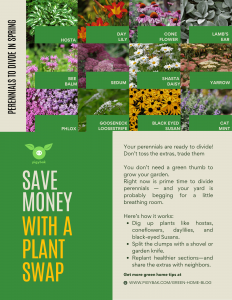
You don’t need a massive budget to have a lawn that turns heads or a garden that makes the neighbors jealous. In fact, you might not need to buy anything at all—just dig, divide, and share.
This spring, skip the overpriced nursery runs and instead throw a Neighborhood Plant Swap Party. It’s the ultimate community-powered way to green up your space, save money, and turn one scraggly hosta into ten. Even better? It’s the perfect excuse to meet your neighbors, boost biodiversity, and prep your yard with native plants that actually thrive (not just survive).
In this guide, we’ll show you how to:
Let’s start with the basics. When you’re swapping or dividing plants, you need to know:
Annuals: These plants complete their lifecycle in one season. You plant them, they bloom, they seed, and they’re done. Think marigolds, zinnias, and most vegetables.
Perennials: These come back every year—bigger and better. Perennials are the MVPs of a sustainable garden because you can divide them and share.
More Resources: Better Homes & Gardens Guide to Annual vs. Perennial
Many perennials benefit from being divided every few years. Not only does it prevent overcrowding, but it also gives you free plants.
Best time to divide: Early spring or fall when the plant is dormant or just starting to grow.
More Resources: OSU Extension: Dividing Perennials
Not all plants need to be dug up to multiply. Some can be snipped and started from cuttings or runners.
How to Propagate:
Easy-to-propagate plants:
Pollinator Gardens: Why Less Mowing = More Bees
You don’t need a big budget or fancy signs—just a few tables, some plant-loving friends, and a clear invite. Here’s your 7-step plan:
📅 Step 1: Pick the Date + Spot
Front yard, driveway, or park. Early spring or fall is perfect for planting.
Step 2: Spread the Word
Use Pigybak’s community tools to post your event. Share to Facebook groups, Nextdoor, or stick signs around the block.
Step 3: Use a Signup Sheet
Create a Google Form or paper sign-up so people can list what they’re bringing. Keep it simple. We’ve got a template below!
Step 4: Label Everything
Encourage neighbors to write plant names, sun/shade needs, and if they’re native. Bonus points for bloom times.
Step 5: Offer Refreshments
Iced tea + cookies = higher turnout. Trust us.
Step 6: Have Extras
Bring plastic bags, newspaper, and cardboard boxes for folks who forget.
Step 7: Share the Love
Encourage people to tag @Pigybak in their swaps. Community-powered lawn care is the new curb appeal.
Swapping is just the start. Keep those plants thriving with the basics of green lawn care:
Mulch: Use shredded leaves or untreated bark to retain moisture and suppress weeds.
Mow Smart: Don’t cut more than 1/3 of your grass height. Let clippings fall back to feed the soil.
Water Wisely: Early morning is best. Deep and infrequent beats daily sprinkles.
More Resources: EPA Guide to Sustainable Lawncare
Pigybak Tip: Use Pigybak to find local landscapers, mulchers, and native plant specialists. Post a project and invite your block to get better deals—just like your swap party.
Use this Google Doc or copy to paper:
| Plant Name | Annual or Perennial | Sun/Shade | Native? | Notes |
|---|---|---|---|---|
| Hosta | Perennial | Shade | No | Easy to divide |
| Bee Balm | Perennial | Sun | Yes | Attracts pollinators |
| Mint | Perennial | Partial | Yes | Spreads fast |
You can add a QR code linking to your sign-up in Pigybak or your group chat. Make it fun, chill, and welcoming.
The best part of a plant swap? It’s not just the plants. It’s the community. When you treat landscaping and lawn care as a shared mission, you’re not just saving money—you’re transforming your block.
Pigybak is here to make that easier. Whether you’re hiring a landscaper, planning a pollinator garden, or just want to team up on mulch delivery—start a Ride, post to your neighborhood, and get it done together.
Your garden’s waiting. So is your block party.