Transparent Contractor Estimates
The checklist that protects your budget and your comfort.
Your home does not need a mystery novel. Your estimate does.
If you have ever looked at a quote and thought, “Wait, what am I actually paying for,” you are not alone. A fuzzy estimate is one of the fastest ways to end up with surprise charges, delayed timelines, and a project that goes from “quick fix” to “how are we here.”
This week’s Green Home theme is trust and transparent quotes, because the greenest upgrade is the one you actually finish. The second greenest upgrade is the one you finish without paying for things you never asked for.
And there is a bonus: transparent quotes are not just about fairness. They are how you prioritize the right improvements for energy savings and comfort. When scope and materials are clear, you can make smart calls on the upgrades that reduce drafts, prevent moisture issues, and keep your HVAC from working overtime.
The U.S. Department of Energy notes that reducing drafts can potentially save a meaningful chunk of energy costs, while making the home noticeably more comfortable. The EPA also estimates that air sealing plus insulation upgrades can save homeowners around 15% on heating and cooling costs on average.
So let’s make the estimate make sense.
Why transparent estimates matter for a green home
A green home is not just solar panels and new windows. It is the unsexy stuff that stops wasting energy.
The problem is, the unsexy stuff gets buried in vague quotes like:
-
“Seal gaps as needed”
-
“Fix furnace issues”
-
“Misc materials”
-
“Labor: TBD”
That kind of estimate makes it hard to compare bids, and it makes it easy for scope to creep. If you cannot see what is included, you cannot make the best decision for your budget or your home’s performance.
Transparent estimates do three things:
-
They reduce surprises by spelling out assumptions, allowances, and what happens if something changes.
-
They make bids comparable because you are comparing real scope, not vibes.
-
They help you choose the right energy wins like air sealing, insulation, filter upgrades, duct sealing, and simple HVAC tune-ups.
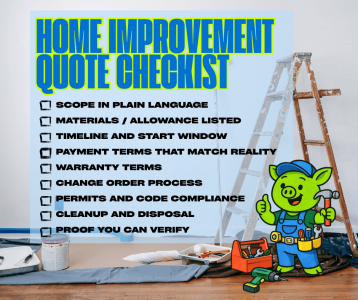
The Transparent Quote Checklist
Use this as your pre-walkthrough message and your post-quote review.
1) Scope in plain language
You want a quote that tells you:
-
What is included
-
What is not included
-
What the final “done” looks like
If a quote says “replace bathroom fan,” it should specify whether that includes electrical work, venting to the outside, patching drywall, and disposal.
2) Materials are listed or an allowance is stated
Two clean options:
-
A list of materials, brands, model numbers when relevant
-
An allowance: “Includes a $___ materials allowance”
If you see “materials: TBD” with no allowance, you are signing up for a financial jump scare.
3) Timeline and start window
Look for:
-
Start date window (not a fantasy exact date)
-
Estimated duration
-
What could push the schedule
This is where honest contractors shine. They will tell you what slows jobs down.
4) Payment terms that match reality
The Federal Trade Commission warns against paying the full amount up front.
A fair structure is usually milestones, such as:
-
Deposit
-
Midpoint payment
-
Final payment after walkthrough
If the estimate demands full payment before work begins, treat it like a red flag you can see from space.
5) Warranty terms
Look for:
-
Labor warranty
-
Parts warranty
-
Who handles manufacturer claims
If the warranty section is missing, ask for it before you sign.
6) Change order process
This is the difference between a calm project and a chaotic one.
A good quote includes a simple rule like:
-
“If we discover X, we will price it and get approval before proceeding.”
If the change order process is not stated, your budget is doing overtime.
7) Permits and code compliance
If permits apply to your project, your quote should state:
-
Who pulls permits
-
Who pays permit fees
-
Whether inspections are included
8) Cleanup and disposal
This is where good pros quietly win.
Your estimate should mention:
-
Debris removal
-
Dumpster needs (if any)
-
Daily cleanup expectations
9) Proof you can verify
Not “trust me.” Real proof:
-
License and insurance where required
-
References
-
Photos of similar work
-
A simple written scope you can keep
Two questions that instantly reveal estimate quality
Send these to any contractor before you accept a bid.
-
“What would cause this price to change?”
A pro answer includes specific conditions and a clear process. -
“What is not included that homeowners often assume is included?”
This prevents silent misunderstandings.
Green Home tie-in
The best comfort upgrades to ask for clearly
If your goal is lower bills and a more comfortable home, these upgrades benefit from crystal-clear scope:
Air sealing and weatherstripping
Ask for specifics:
-
Which doors, windows, attic hatches, rim joists
-
Which products (caulk, foam, weatherstripping type)
The EPA points to meaningful savings from sealing and insulating when done properly.
Attic insulation improvements
Your quote should specify:
-
Current R-value estimate
-
Target R-value
-
Whether air sealing is included before insulation (it should be)
HVAC tune-up and filter plan
Ask for:
-
What is inspected and cleaned
-
What is measured (static pressure, temperature split, combustion safety where relevant)
-
Filter size, type, and replacement cadence
Plumbing leaks and hot water losses
A quote should state:
-
Which fixtures or lines
-
Whether drywall access and patching is included
-
Whether shutoff replacements or valve updates are included
Transparent scope helps you pick the projects that actually improve comfort and performance, not just the ones that sound impressive.
The neighbor-powered way to get clearer quotes
You do not need to hire together to be smarter together.
If several homes on the same street are collecting bids this month, you can coordinate:
-
One shared walkthrough window
-
A shared checklist
-
Shared questions to ask
-
Shared notes on what was included
That makes it harder for vague estimates to survive, and easier for great contractors to win the work they deserve.
If you want a simple way to organize that, start a Pigybak Ride for your street, invite a few neighbors, and keep it focused on one job type. Everyone hires separately. Everyone gets a clearer playing field.
Contractor corner
Why clarity is the ultimate trust signal
Homeowners do not hate paying. They hate ambiguity.
Clear quotes reduce:
-
Ghosting after walkthroughs
-
Price shopping
-
Callbacks caused by mismatched expectations
-
Awkward payment conversations
If you are a contractor, a one-page scope summary with a clean change-order rule is one of the fastest ways to look premium without raising prices.
Use the Transparent Quote Checklist, then start a Pigybak Ride to compare bids with neighbors.
Clear scope. Clear price. Less stress.